


The production of a composite pressure vessel begins with the molding of a Type 4 thermoplastic liner that ensures liner’ s uniformity and one-piece integrity. The liners are produced by a range of polymers, including polyethylene (PE) and polyamide (PA), chosen based on its superior gas permeation resistance and operating temperature range. A key advantage of our manufacturing process is the flexibility provided by our in-house mold production shop. This facility allows us to tailor the design of our vessels to meet specific client needs, enhancing both performance and efficiency. To reinforce the Type 4 thermoplastic liner, Pressura employs advanced filament winding technology. This process involves wrapping the liner with high-quality automotive-grade fiber and resin materials, which are selected to meet stringent safety and functional requirements. The precise control of winding parameters is critical to this process, as it ensures the highest possible strength and lowest weight for the composite vessel. The use of prime quality automotive-grade materials not only enhances the mechanical properties of the vessel but also ensures long-term durability and reliability, making the vessels suitable for demanding applications. Pressura conducts comprehensive high pressure hydrostatic and pneumatic End-of-Line and batch tests in-house, adhering to global regulations, standards such as ECE R-110, ISO 11439, ECE R-134, ISO11439 and customer specifications. This rigorous testing protocol guarantees the safety and performance of each vessel before it is delivered to the customer.
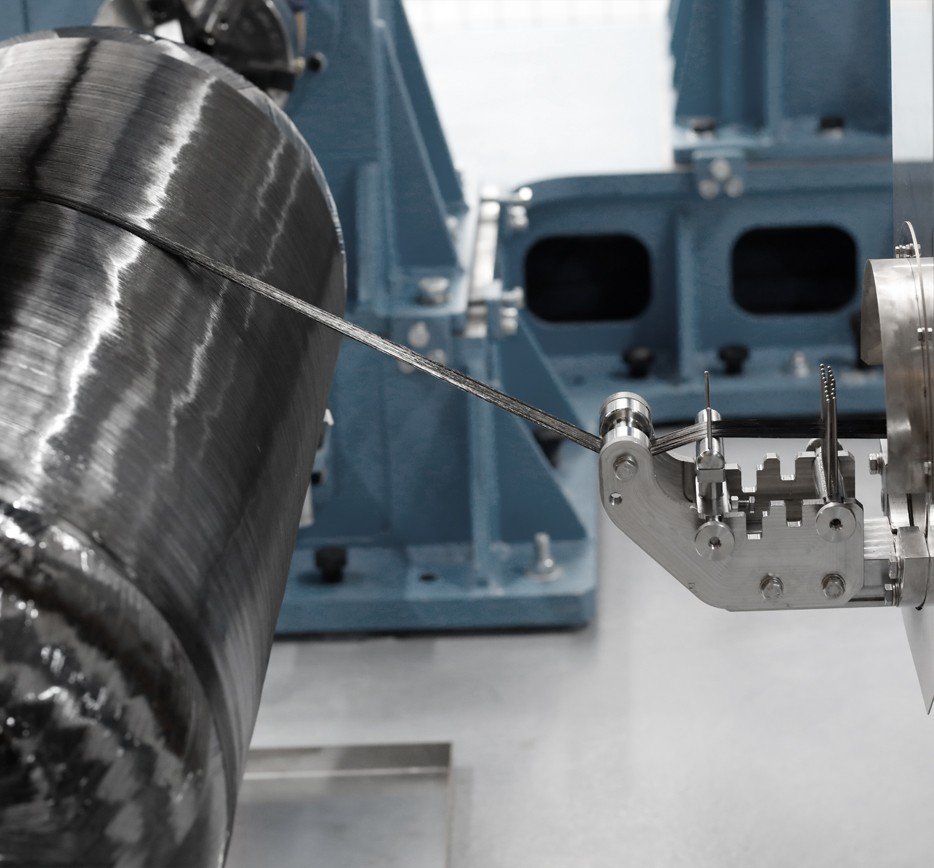

At Pressura, our research and development efforts are centered on driving constant innovation and excellence in the field of composite pressure vessel technology. We engage in co-designing and determining product specifications together with our customers to ensure our solutions meet and exceed industry standards. Our expertise in Type 4 composite pressure vessel modeling and finite element analysis (FEA) allows us to predict and enhance vessel performance accurately. We also specialize in end-boss design and FEA, contributing to the overall structural integrity and reliability of our products. Our capabilities extend to Type 4 termoplastic liner design and mold production, where we employ advanced filament winding simulations and failure mode and effects analysis (FMEA) to optimize design and manufacturing processes. Our commitment to innovation is further demonstrated by our proficiency in Type 4 thermoplastic liner production using one-piece molding technology that eliminates the welding areas. The production of composite vessels with automated filament winding technology showcases our dedication to using cutting-edge techniques. Pressura' s Type 4 COPV test systems reflects our unwavering commitment to delivering superior, reliable, and innovative solutions to our clients.
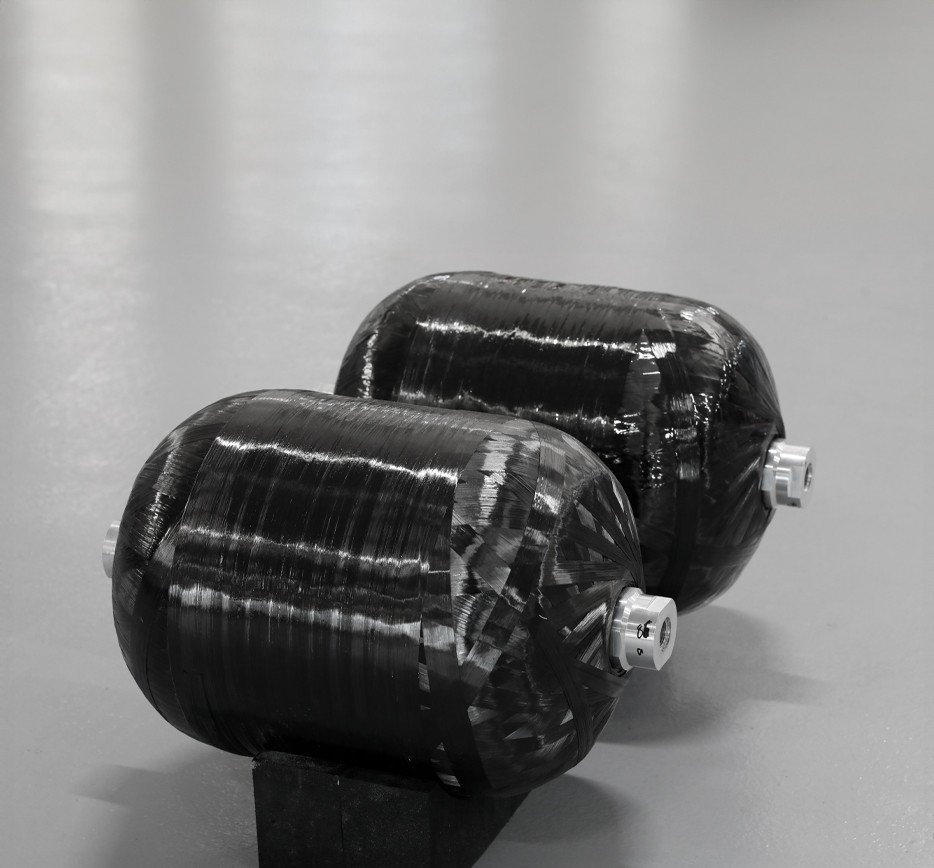
Type 4
Type 4 Composite Pressure Vessels
Material: Polymer liner (e.g., PE, PA, PEEK) fully wrapped with carbon fiber and/or glassfiber or both!

Type 4 composite pressure vessels, represent a significant leap forward in the realm of mobility, embodying cutting-edge technology that promises enhanced safety, efficiency and sustainability for the storage and transportation of Compressed Natural Gas (CNG) and Hydrogen (H2) gas, offering significant advantages in weight reduction, cost and durability.
Pressura’ s Type 4 vessels, are constructed using advanced materials such as carbon fiber reinforced polymers (CFRP) or glass fiber reinforced polymers (GFRP) which provide exceptional strength and durability while remaining lightweight. This makes them ideal for applications where weight reduction is critical, such as in transportation sectors aiming to minimize fuel consumption and emissions.
For Compressed Natural Gas storage and transportation, our Type 4 composite vessels store natural gas compressed to high pressures, typically up to 200 bar or more, depending on regulatory standards and application requirements. Pressura’ s vessels are designed to withstand high internal pressures while maintaining integrity and ensuring safety during storage and transportation. Our unique composite design minimizes weight without compromising on strength, making them excellent for heavy-duty trucks and buses. Our Type 4 vessels also offer superior resistance to corrosion, a key consideration for the long-term reliability of CNG storage solutions.
For Compressed Hydrogen (H2) Gas Type 4 composite pressure vessels play a pivotal role in the hydrogen economy by safely storing hydrogen gas at pressures up to 350 bar or higher. The high-pressure storage capability of Pressura’ s composite pressure vessels is essential for maximizing the energy density of hydrogen, enabling longer driving ranges for fuel cell electric vehicles (FCEVs) and efficient storage in stationary hydrogen refueling stations. The lightweight nature of our vessels reduces the overall weight of FCEVs, contributing to improved vehicle performance and energy efficiency.
The design of our Type 4 composite pressure vessels, incorporates advanced manufacturing technique of filament winding, ensuring precise control over fiber orientation and resin distribution. This manufacturing precision enhances the vessel's mechanical properties and durability, meeting stringent safety standards required for storing compressed gases.
Composite pressure vessels are classified into different types based on their construction and materials.
Here's a comparison of Type 1, Type 2, Type 3, and Type 4 composite pressure vessels for the storage of high-pressure gases.
Type 1

Type 1 Composite Pressure Vessels
Material: All-metal (such as steel or aluminum) liner
Type 2
Type 2 Composite Pressure Vessels
Material: Metal liner with a composite overwrap over only cylindrical area
Type 3
Type 3 Composite Pressure Vessels
Material: Aluminum liner with fully wrapped filament-wound structure
